Welcome to the official website of Guangzhou Sanxin Metal Technology Co., Ltd.!


Guidance on Selecting Thermal Spray Materials
Release time:
2019-12-12 16:36
Source:
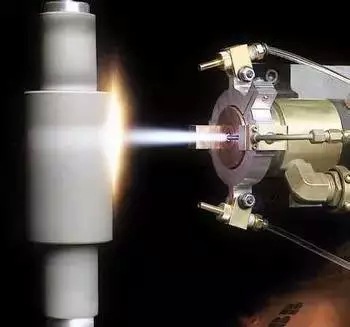
Guidance on Selecting Thermal Spray Materials
Selecting the right coating material is a critical step in ensuring that the desired coating performance is achieved. When choosing a coating material, one must first take into account the service conditions of the workpiece and the specific properties required for the coating. Additionally, factors such as the material of the workpiece, batch size, cost-effectiveness, and the thermal spraying method to be employed should also be considered. According to their functions, coatings can generally be categorized into corrosion-resistant coatings, wear-resistant coatings, friction-reducing and sealing coatings, high-temperature thermal barrier coatings, insulating or conductive coatings, and dimension-repair coatings.
The failure of coated workpieces during service is often not caused by a single factor; therefore, there is not necessarily a simple relationship between meeting operational condition requirements and achieving the desired coating performance. It is essential to conduct a detailed analysis of the operational conditions and, based on references or experimental data, comprehensively evaluate the coating’s structural, physical, chemical, and mechanical properties in order to identify one or more suitable coating materials.
Wear-resistant coatings are one of the primary application areas of surface coating technology. Although there is a rough correlation between coating hardness and wear resistance, hardness alone cannot fully characterize the wear resistance of a surface coating. This is because different types of wear impose varying requirements on material performance, and wear is often accompanied by additional factors such as impact, corrosion, fatigue, and temperature.
When selecting surface coating materials, one should not blindly pursue high-performance or high-priced coatings, which can lead to unnecessary waste. Moreover, the price of a material should never be the sole criterion for determining its quality. Rather, under the prerequisite of meeting the operational requirements, one should opt for the most cost-effective coating materials whenever possible—this is especially important in mass production. For example, if a nickel-based alloy coating is sufficient, there is no need to use a cobalt-based alloy coating.
When selecting surface coating materials, you can generally follow these steps:
(1) Analyze operating conditions and part performance to understand the failure mechanisms and the requirements for coating performance.
(2) List the available coating materials;
(3) Analyze the compatibility between the candidate materials and the matrix material, as well as the thermal spraying methods that can be employed.
(4) Conduct laboratory or field tests as necessary;
(5) Determine the coating material by comprehensively considering service life, cost, and plant conditions.
(6) Determine the surface coating method and develop the coating process.
The following provides a brief introduction to the commonly used coating properties, offering guidance for selecting the appropriate spraying process.
Generally speaking, the main purposes of using thermal spray coatings include the following: (1) corrosion-resistant coatings; (2) wear-resistant coatings; (3) friction-reducing and sealing coatings; (4) high-temperature thermal barrier coatings; (5) insulating or conductive coatings; (6) dimension-repair coatings, and so forth. Different purposes call for different types of coatings.
1 Corrosion-resistant coating
The selection of corrosion-resistant coating materials is quite complex. The operating conditions, working temperature, working environment, and various corrosive media of the component all increase the requirements for coating materials. The corrosive environment may involve aqueous solutions, gases, or a variety of chemical media, and it may also span a wide temperature range. Under conditions where combustible gases are present, combustion gases or unburned fuels can react with other substances at appropriate temperatures, creating highly complex corrosive environments. In general, there are three basic mechanisms underlying corrosion prevention:
(1) Exclude corrosive environments. This primarily relies on coatings that are impermeable to corrosive media and do not react with them.
(2) Preventing electrochemical corrosion—this involves leveraging the properties of the substrate metal and coating material, specifically their oxidation-reduction potentials, to determine whether the coating acts as a cathode or an anode relative to the substrate, as well as the exact electrode potential involved. If the coating and substrate materials are improperly matched, electrochemical corrosion may occur.
(3) Inhibiting corrosion. By using chemical corrosion inhibitors as sealants in spray coatings, certain protective effects can be achieved. This approach involves either impregnating porous spray coatings with corrosion inhibitors or filling them with inorganic sealants. With thinner coatings, it is possible to fully repel corrosive environments. In some cases, corrosion-resistant metals can also serve as anti-corrosion coatings; however, most commonly, oxide ceramics are used as anti-corrosion coatings.
The main types of corrosion-resistant coatings are as follows:
(1) Atmospheric corrosion-resistant coating
This type of coating is resistant to corrosion under the following conditions: metals or alloys exposed to outdoor or indoor atmospheric environments—but not immersed in liquids. In the atmosphere, the coating can effectively withstand corrosion caused by wind, rain, sunlight, and other climatic variations. All quality assessments are based on results obtained from outdoor exposure. Coatings used outdoors will also perform well indoors.
These types of coatings include:
a. Industrial-atmosphere-resistant coating. This coating can withstand harsh atmospheric conditions characterized by soot or chemical fumes (such as those found in large cities and heavy industrial zones).
b. Coatings resistant to marine atmospheric corrosion. These coatings can withstand corrosion in environments near the ocean or under conditions characterized by salt spray—environments that are highly saline and humid.
c. Coatings resistant to atmospheric corrosion in rural areas. Although the rural atmosphere lacks industrial smog and salt spray typical of marine climates, it does contain trace amounts of pollutants.
(2) Immersion-resistant corrosion coating
Immersion corrosion occurs when a metal or its coating is exposed to a liquid and subjected to immersion—either wholly, partially, or in alternating cycles. The anticorrosive coating must be able to withstand corrosion in environments both above and below the liquid surface. Such coatings include the following types:
a. A coating that is resistant to freshwater consumption. This coating is resistant to freshwater and does not alter the chemical composition of the water, ensuring it remains safe for consumption.
b. Coating resistant to non-potable freshwater. This coating is resistant to non-potable freshwater with a water temperature not exceeding 52°C and a pH value ranging from 5 to 10.
c. Heat-resistant freshwater coating. This water-based coating is not intended for drinking; the water temperature ranges from 52 to 204 °C, and the pH value is between 5 and 10.
d. Saltwater corrosion-resistant coating. This coating can be fully or partially immersed in static or flowing brine or seawater.
e. Coatings used in the chemical and food industries. These coatings are resistant to chemical agents such as oils, fuels, and solvents, as well as to corrosion from a wide variety of foods; however, they do not alter the chemical composition or taste of the food.
The two aforementioned corrosion-resistant coatings can be prepared by arc spraying (including high-velocity arc spraying) or flame spraying zinc or aluminum.
(3) Chemical-resistant coating
These coatings can withstand corrosion from a variety of acidic, alkaline, and saline solutions, as well as from vapors and solids. The coatings primarily consist of various iron-based, nickel-based, and cobalt-based alloys, self-fluxing alloys, non-ferrous metals, oxide ceramics, chromium carbide, tungsten carbide, and other metal-ceramic materials. Since thermal spray coatings all have a certain porosity, it is essential to perform filling and sealing treatments on these coatings. Moreover, the sealants themselves must also be resistant to corrosion by chemical media.
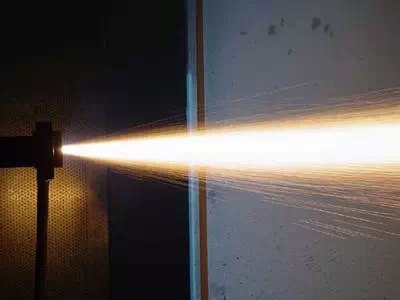
2 Wear-resistant coating
Part wear is typically accompanied by a rise in temperature, either due to friction or related to the operating environment. In general, wear-resistant coatings are applied under conditions involving impact wear or in corrosive environments. Therefore, as wear-resistant coatings, they must be hard, resistant to fracture, and possess certain levels of thermal resistance as well as resistance to corrosion by chemical media. Many carbides, nitrides, oxides, nickel-based alloys, and cobalt-based alloys all exhibit these properties.
Due to differences in the operating environment, working temperature, and wear conditions, the wear patterns are relatively complex. Summarized, there are four main scenarios:
(1) Adhesive wear: This wear-resistant coating is primarily used as a surface for both soft and hard bearings.
a. Soft bearing surface. This coating allows abrasive particles carried by the lubricant to become embedded within the coating, and it can also cause deformation of the reference lines on the bearing surface. Soft bearings are less expensive, but they require excellent lubrication; otherwise, wear will occur too rapidly.
b. Hard bearing surfaces. This coating can be used as a highly wear-resistant and hard bearing material, offering excellent resistance to abrasive wear, reducing scratches and scarring, and suitable for hard bearing surfaces operating under high loads at low speeds.
(2) Abrasive wear
a. Coatings resistant to abrasive particle wear. These coatings can withstand the cutting and grooving effects of foreign particles between sliding surfaces; therefore, the coating’s hardness is greater than that of the abrasive particles themselves. For coatings used at high temperatures, the operating temperature ranges from 540 to 845°C; for coatings used at low temperatures, the operating temperature is below 540°C.
b. Hard-face wear-resistant coatings. These coatings can withstand sliding wear on hard surfaces or soft surfaces containing hard abrasives. The coating must be smooth to minimize the degree of wear and should also have an appropriate coefficient of friction. Coatings used at high temperatures operate at temperatures ranging from 540 to 845°C, while those used at low temperatures operate at temperatures below 540°C. Among the hard-face wear-resistant coatings used at low temperatures are also coatings that resist wear caused by fibers and textile threads.
(3) Surface fatigue wear
a. A coating resistant to orienteering wear. This coating can withstand wear caused by sliding, rolling, or impact on the track and is sufficiently durable to endure continuous impact abrasion.
b. Coatings resistant to wear caused by random motion. These coatings can withstand vibrational friction arising from small displacements between contacting surfaces. Since the contact friction system involves random motion, the wear pattern of the coating is highly unpredictable; vibration is the most common phenomenon associated with this type of wear. Such coatings are further categorized into two types: those designed for use at high temperatures and those designed for use at low temperatures.
c. Cavitation-resistant coating. This coating can withstand mechanical impact wear caused by cavitation in liquid flows and features high toughness, excellent wear resistance, and superior corrosion resistance.
(4) Erosive wear
This coating is resistant to erosion caused by sharp and hard particles—particles that are transported by gases or liquids and move at a certain velocity. When the erosion angle of the particles is less than 45°, the particles fly along the surface, resulting in abrasive wear. In such cases, the primary requirement for the coating is its hardness. However, when the erosion angle of the particles exceeds 45°, the coating’s toughness becomes the key factor. This coating is available in two variants, suitable for use under both high-temperature and low-temperature conditions.
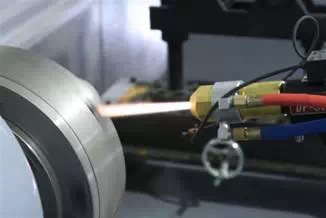
3. Mechanical Part Clearance Control Coating (Wear-Resistant Sealing Coating)
The mechanical efficiency of a machine driven by gas under pressure depends on the sealing capability of its rotor. High sealing capability can minimize or even prevent gas leakage; therefore, it is essential to maintain an extremely tight clearance between the rotor and the stator. Since rotating parts may expand or elongate under operating conditions and potentially come into contact with stationary parts, it is quite challenging to manufacture machines with such tight clearances. However, this issue can be effectively addressed by using a wearable sealing layer. The method involves spraying a wearable sealing coating onto the stationary part. As the rotating components move, this coating forms a tightly fitting sealing channel, ensuring precise dimensional coordination.
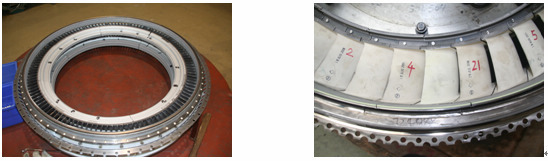
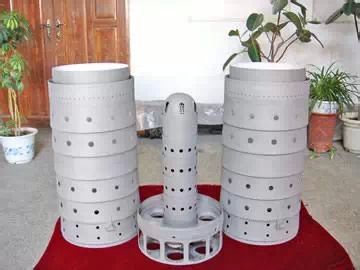
Typical abradable coatings are used on the compressor and turbine casings of jet engines. The coating should be sufficiently thick to allow for overlap between the rotor blades and the casing during engine assembly. When the engine starts, the blade tips rub against the coating, gradually wearing away some of the coating material and forming channels—while the blades themselves remain undamaged. Because the coating accommodates both radial and axial movements of the blades, each blade tip can achieve optimal sealing within the coating. When designing an abradable coating, it is essential to address two fundamentally opposing requirements: the coating must not only be abradable but also resistant to erosion caused by airflow and particle impingement. Therefore, it is necessary to carefully balance the coating’s abradability against its resistance to erosion, as well as its thermal stability and resistance to chemical corrosion.
4 High-temperature thermal barrier coatings
(1) High-temperature coatings: These coatings can enhance the high-temperature operating conditions of substrate components and withstand chemical or physical degradation, as well as chemical damage caused by corrosion, under high-temperature conditions.
a. Atmospheric oxidation-resistant coating. This coating prevents damage to the substrate caused by high-temperature oxidation. The coating has a melting point higher than the operating temperature and exhibits low vapor pressure at the operating temperature. The coating is not required to withstand mechanical wear.
b. Gas-corrosion-resistant coatings. These coatings protect the substrate by shielding it from exposure to high-temperature corrosive gases. When considering reactions between the gas and the coating, it is essential to prevent the formation of adsorbed oxides, brittle phases, or components that could penetrate the coating and erode the substrate. Such coatings are not required to withstand mechanical impacts or wear.
c. High-temperature (above 850°C) erosion-resistant coatings. These coatings must not only withstand high temperatures but also resist particle erosion. At high temperatures, high-speed particles and high-pressure gases create a variety of harsh environments; therefore, the coating must be able to endure erosion caused by moving, sharp, and hard particles. When the particle impact angle is less than 45°, the particles cause abrasive wear along the surface, so the coating must exhibit high hardness. When the particle impact angle exceeds 45°, the coating must possess high toughness.
d. Thermal barrier coatings. These coatings have low thermal conductivity, which helps prevent the substrate material from reaching its melting point and also serves to transfer radiant heat.
(2) Molten-metal-resistant coatings: These coatings can withstand corrosion by molten metals and do not exhibit wetting behavior toward them. Examples include coatings resistant to molten zinc, aluminum, steel, iron, and copper.

5 Electrical insulation or conductive coating
Thermal spray coatings can also be used as conductive materials, such as in printed circuits and contacts for furnace heating elements. Thermal spray coatings made from oxides and organic plastics can serve as electrical insulators. The electrical properties of the substrate material are influenced by the sprayed coating material. In general, the choice of spraying material should be based on its known properties and its intended application conditions.
(1) Conductive Coatings: These coatings must exhibit excellent conductivity and low electrical resistance.
(2) Dielectric Coatings: These coatings must function as insulators, effectively preventing the flow of electric current. The breakdown strength of the coating (typically expressed as voltage per unit length) and the permissible conductivity are key parameters characterizing dielectric strength.
(3) Shielding coating
a. Radio-frequency shielding coating. This coating must be capable of receiving interfering radio frequencies and conducting them to ground, while providing shielding against radio frequencies and allowing ultra-high frequencies to pass through.
b. Atomic-energy shielding coatings. These coatings provide radiation shielding by blocking the passage of thermal neutrons or gamma rays. Materials with high atomic density, such as lead and steel, can effectively shield against gamma rays. Some elements that are particularly effective at absorbing neutrons include boron, hydrogen, lithium, and cadmium; among these, boron and borides are the most efficient. Such materials can be applied via thermal spraying and possess the ability to absorb thermal neutrons without generating significant amounts of intense secondary gamma rays.
6 Repair coating
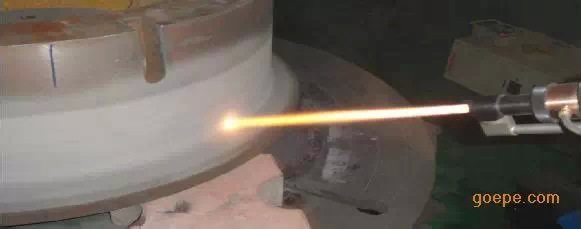
These coatings can be used to repair worn parts or parts that have been improperly machined (such as those with incorrect machining processes or defects in the raw material), as well as parts whose dimensions are out of tolerance. The coating should possess the same properties as the base material. Generally, before repairing a part, mechanical machining should first be carried out to achieve an appropriate level of smoothness, followed by sandblasting and then coating application. The requirements for coating performance primarily depend on the intended application—for example, wear resistance, corrosion resistance, heat resistance, or the coating material being identical to the base material, and so forth.
Relevant Information
The complete set of plasma-sprayed equipment has been shipped to the customer’s site in Thailand.
Core spraying equipment: SX-80 plasma spray main unit, with a 15,000℃ flame suitable for multiple materials including zirconia and silicon carbide; powder feeding accuracy of ±1%, and coating thickness tolerance ≤ ±5 μm. Environmental protection support system: Customized soundproof booth + pulse dust collector—effectively addressing spray noise pollution while achieving highly efficient dust recovery, compliant with Thai environmental standards. Automated equipment: 6-axis industrial robot + intelligent spray cart, enabling precise spraying of complex workpieces and automated loading/unloading, boosting production efficiency by 40%.
On-site engineers provide hands-on training, focusing on the core operations of plasma spraying equipment such as the SX-80. Sanxin has customized a complete solution for its customers, including an automated spraying robotic arm, a soundproof booth, and a dust removal system—ensuring both high spraying efficiency and compliance with environmental standards.
Guangzhou Sanxin Thermal Spraying Turntable Shipment
Guangzhou Sanxin Company manufactures single-station and multi-station thermal spray turntables, which can be paired with plasma equipment, supersonic equipment, and arc equipment. We offer rapid, customized production tailored to customer requirements and product dimensions. A thermal spray turntable is a high-precision rotary worktable specifically designed for thermal spraying processes—including flame spraying, plasma spraying, and arc spraying. By providing controllable rotational speed and exceptional stability, it ensures uniform coating thickness on the workpiece surface, thereby enhancing spraying efficiency and quality.
SX-80 plasma equipment is being used at a customer site in Russia.
SX-80 plasma equipment is being used at a customer site in Russia.

Exclusive customized hotline, 24 hours a day, 7 days a week:
Email:CarrieFeng07@outlook.com
Address: Building 8, Liandong U Valley Guangzhou Nansha International Enterprise Port, Nansha Free Trade Zone, Guangzhou City, Guangdong Province


Copyright © 2023 Guangzhou Sanxin Metal Technology Co., Ltd. All Rights Reserved
Powered by www.300.cn


